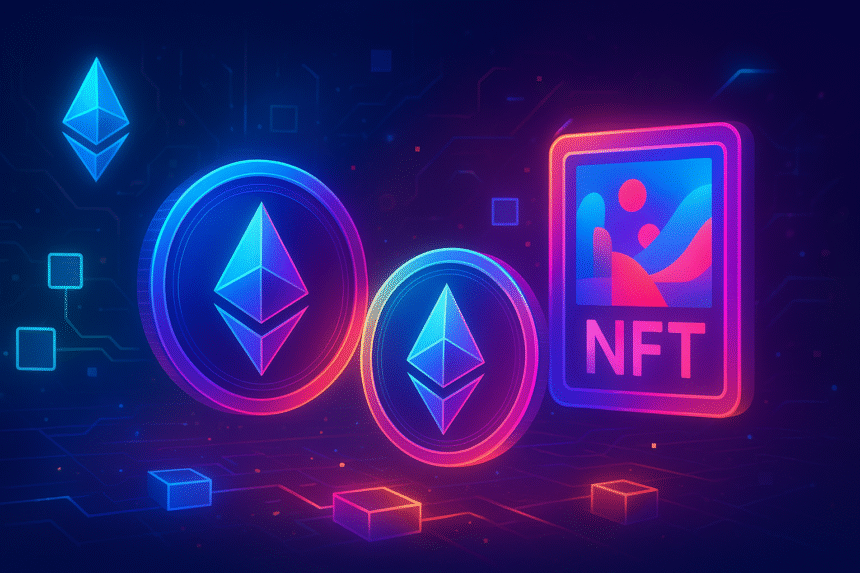
“The Correlation Between the Purchase of NFTs and the Cryptocurrency Ethereum”in this article we discuss about it in detail.Blockchain technology has changed the digital economy by making new financial tools like cryptocurrencies and non-fungible tokens (NFTs) possible. Ethereum (ETH) has become the most important part of the NFT market. To make money in this changing digital world, investors, collectors, and fans need to know how buying NFTs and Ethereum are related.
What are Ethereum and NFTs?
NFTs are one-of-a-kind digital assets that show that you own things like art, music, collectibles, and virtual real estate. Each NFT is unique and stored on the blockchain. They are often stored on Ethereum because it can handle smart contracts. Cryptocurrencies, on the other hand, are interchangeable and fungible.
Ethereum is a decentralised blockchain platform that lets developers make smart contracts and decentralised applications (dApps). Ethereum is the best platform for NFT marketplaces like OpenSea, Rarible, and Foundation because it allows for programmable contracts. Bitcoin does not.
Why Ethereum is Important for Buying NFTs
Ethereum is the most common way to buy and sell NFTs. Here are the reasons why:
Smart Contract Functionality: Ethereum’s smart contracts make NFT transactions automatic, making sure that ownership changes hands safely and clearly.
Market Dominance: Ethereum is the most popular cryptocurrency for digital collectibles because it has the most NFT marketplaces.
Liquidity: Because so many people use Ethereum, NFT buyers and sellers can easily trade ETH for NFTs and vice versa.
Interoperability: NFTs made on Ethereum can work with different dApps, which makes them more useful than just owning them.
This direct link explains why changes in Ethereum’s price often have an effect on NFT purchases and the market as a whole.
The Link Between Ethereum Price and NFT Sales
Several studies and market analyses show that there is a strong positive relationship between the prices of Ethereum and the sales of NFTs. When the price of Ethereum goes up, people tend to buy more NFTs for a number of reasons:
Higher Investor Confidence: Investors who want to diversify into NFTs are more likely to buy ETH when its price goes up.
More Buying Power: Buyers can afford more expensive NFTs when Ethereum is going up.
Trends in speculation: People who collect NFTs often follow cryptocurrency trends and use ETH gains to buy digital assets.
On the other hand, a drop in Ethereum’s value can make people less likely to buy NFTs because they don’t want to invest when the market is uncertain.
Things that affect the relationship between Ethereum and NFTs
There are a number of things that affect how Ethereum prices affect NFT purchases:
Gas Fees: High transaction fees on Ethereum can make it hard for small NFT buyers to buy.
Market Sentiment: Good news about Ethereum upgrades, like Ethereum 2.0, can make people more interested in NFTs.
Rarity and Scarcity: Even when the price of ETH drops a little, rare NFTs still get buyers.
Celebrity and Brand Collaborations: Big NFT releases often make people want to buy ETH, no matter what the market is doing.
Knowing these things helps investors guess what will happen in the NFT market based on what happens with Ethereum.
How Ethereum Fits into NFT Investment Plans
When it comes to NFT investments, Ethereum is often the main focus because it is so important to transactions. Things that investors should think about:
Timing Purchases: Watching the price of ETH to buy NFTs when Ethereum is stable or going up.
Diversifying NFTs means putting money into different types of NFTs, like gaming, art, and metaverse assets, to protect yourself from risk.
Using Layer-2 Solutions: Platforms like Polygon and Arbitrum use Ethereum’s network but lower petrol fees.
Investors can get the most out of their NFT purchases by following Ethereum trends. This lowers their risks.
Trends in the Ethereum and NFT Markets: Case Studies
Case Study 1: The Bored Ape Yacht Club (BAYC)
When Ethereum prices went up in 2021, BAYC NFT prices went up a lot too. This showed that there is a clear connection between ETH value and NFT demand.
CryptoPunks Case Study 2
Rare CryptoPunks consistently sold for millions of ETH, showing how Ethereum makes it easy to buy and sell high-value NFTs.
These examples show that there is a strong link between how well the Ethereum and NFT markets do.
Things to Think About and Risks
Ethereum is what makes people buy NFTs, but investors should be aware of the risks:
Volatility: The markets for both ETH and NFTs are very unstable.
Risk of Liquidity: It might be hard to sell NFTs quickly without changing prices.
Regulatory Uncertainty: More and more, governments are looking closely at NFTs and cryptocurrencies.
Environmental Concerns: Ethereum’s switch to proof-of-stake uses less energy, but some buyers are still cautious.
To make smart investment choices, you need to know about these risks.
What Will Happen to NFTs and Ethereum in the Future
As more people use blockchain, the link between NFTs and Ethereum is likely to get stronger. Things to keep an eye on include:
Ethereum 2.0 upgrades will make it easier to buy NFTs by lowering petrol fees and speeding up transactions.
Mainstream Adoption: More and more big brands and celebrities are launching NFTs, which is driving up demand for Ethereum.
Cross-Chain NFT Platforms: Ethereum is the most popular, but platforms that work with other blockchains could make NFT purchases more varied.
Investors who keep an eye on Ethereum trends and how the NFT market works are in a good position to take advantage of new chances.
Questions and Answers
Q1: What makes Ethereum the best cryptocurrency for buying NFTs?
A1: Ethereum is the best choice for NFT buyers and sellers because it supports smart contracts, powers most NFT marketplaces, and makes sure that transactions are safe and clear.
Q2: Does the price of Ethereum have an effect on NFT sales?
A2: Yes. There is a strong link between the price of ETH and the number of NFT purchases. When ETH prices go up, NFT transactions tend to go up as well.
Q3: Is it possible to buy NFTs with other digital currencies?
A3: Yes, some marketplaces do accept other cryptocurrencies, but Ethereum is still the most popular one for NFT transactions.
Q4: What can investors do to lower their risks when they buy NFTs with Ethereum?
A4: Strategies include keeping an eye on ETH trends, spreading out NFT investments, using Layer-2 solutions to lower fees, and focussing on rare or high-quality NFTs.
Q5: Will future changes to Ethereum affect NFT purchases?
A5: Yes, for sure. Ethereum 2.0 and other upgrades are meant to lower transaction fees and make the network more scalable. This will probably lead to more people using and trading NFTs.
In conclusion
The link between NFTs and Ethereum is more than just a coincidence; it is the basis for both. Ethereum is the best platform for NFT transactions because it has smart contract features, is the most popular market, and is easy to trade. Investors need to know about this connection in order to make smart decisions, time their purchases, and guess what will happen in the market. Anyone who wants to make money from the digital asset revolution needs to keep up with how NFTs and Ethereum are changing.