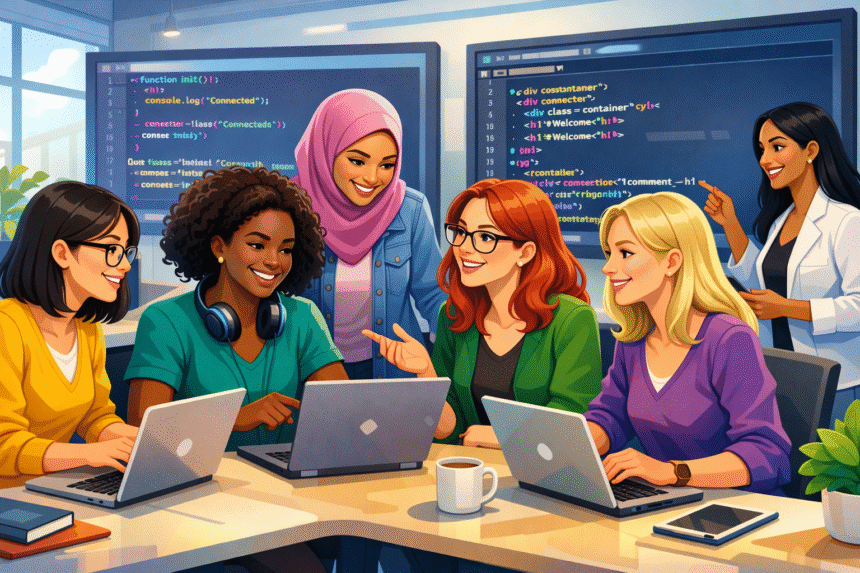
The tech world is changing quickly, and there are more chances than ever for women to work in tech. But a lot of women who want to work in technology have trouble getting the education, training, and mentorship they need. To get women ready for tech education, you need to think carefully, make a plan, and have access to the right tools. This guide will show you useful steps, tools, and strategies that can help women do well in tech education and have successful careers.
Why Women in Tech Education Are So Important
Women have different ways of looking at things, being creative, and solving problems in technology. We are still underrepresented in tech fields, especially in areas like AI, cybersecurity, data science, and software development, even though things have gotten a lot better. Women who get ready for tech education not only learn the technical skills they need, but they also gain the confidence to break down barriers, drive innovation, and make a real difference in the tech world.
Taking the time to get ready for tech school can boost your confidence, improve your skills, and lead to jobs that are in high demand. Women can successfully navigate the technology landscape with the right guidance, mentorship, and resources.
Find out what you want to do and what you’re interested in
The first thing you should do to get ready is figure out what you want to do with your career and what areas of technology interest you. Technology is very broad and includes areas like:
- Creating software and writing code
- Science of data and analytics
- AI and machine learning
- Ethical hacking and cybersecurity
- Cloud computing and DevOps
- Designing the user interface and user experience and building the front end
Finding out what you are really interested in can help you focus your learning, pick the right courses, and learn the skills that will help you the most in your career.
Look into educational programs and chances
Women who want to learn about technology have a lot of options, including online classes, university programs, and coding bootcamps. When looking into programs, think about:
Accreditation and trustworthiness: Make sure that the program is well-known and respected in the field.
Relevance of the curriculum: Find classes that teach useful skills and new technologies.
Flexibility: You can learn while taking care of other things because there are online and part-time options.
A supportive community: Programs that offer networking and mentorship can help you grow faster.
Coursera, edX, Udemy, and Khan Academy are all well-known sites that offer cheap courses. MIT, Stanford, and Google also have specialized tech programs for women.
Build a strong base of core skills
Before getting into specific areas, it’s important to build a strong base. Some of the most important skills are:
- For coding, data analysis, and algorithms, you need to know math and how to think logically.
- Basic programming skills: Learn languages like Python, JavaScript, or HTML/CSS first.
- Problem-solving skills: the ability to look at problems in a logical and methodical way.
- Communication and working together: Teamwork is very important for tech projects.
A strong base makes it easier and more effective to learn more advanced things. Women who have a strong foundation are more confident and flexible in tech jobs.
Use online learning and resources to your advantage
Online platforms have made it easier for people to learn about technology. Women can gain from organized programs, lessons, and workshops. Some good ways to do this are:
- Following coding tutorials that break things down into steps
- Attending online workshops and tech webinars
- Taking part in coding challenges and hackathons
- Using interactive sites like Codecademy or LeetCode
GitHub, Stack Overflow, and Women Who Code are examples of online communities that offer networking, mentorship, and hands-on experience with real projects. These platforms help connect theory with real-world use.
Look for mentors and role models
Mentorship is very important for helping women learn about technology. Mentors with a lot of experience can help you choose a career path, improve your skills, and deal with problems. Here are some ways to get in touch with mentors:
- Joining groups for women in tech and professional networks
- Going to tech meetups and conferences
- Getting involved in tech communities and LinkedIn
Role models give people confidence and show them what they can do. Seeing how successful women in tech have gotten to where they are can inspire students to keep going and not give up.
Get Real-World Experience by Working on Projects
It is important to learn theory, but it is even more important to use what you learn in real-life situations. Women getting ready for tech school should focus on:
- Creating your own projects, like websites, apps, or data dashboards
- Helping with open-source projects
- Taking part in internships or tech volunteer programs
Hands-on experience shows future employers what you can do and builds a portfolio that shows off your skills and ability to solve problems.
Create a Learning Environment That Supports
A learning environment that is positive and supportive makes people want to keep going and grow. Some strategies are:
- Making a study plan with a clear structure
- Joining groups of people who study together or online
- Looking for helpful feedback from friends and mentors
- To stay motivated, celebrate small wins.
Supportive environments lower stress, help people stay in school, and make learning fun.
Get ready for problems and learn how to be strong
Women who work in tech may face problems like gender bias, feeling like an imposter, or not being represented. It’s just as important to get ready mentally and emotionally as it is to learn technical skills. Ways to get through tough times include:
- Building self-confidence and being assertive
- Getting professional help or counseling if you need it
- Honoring the differences and welcoming everyone in learning spaces
- Seeing setbacks as chances to grow and learn from them
Resilience helps you solve problems better at work and makes sure you succeed in the long run.
Look into scholarships and other forms of financial aid
Money problems shouldn’t stop people from getting a tech education. A lot of groups give scholarships, grants, and other forms of financial aid only to women who work in tech. Some examples are:
- Scholarship for Women Techmakers from Google
- Adobe Scholarship for Women in Tech
- Scholarships from AnitaB.org
- Financial Aid Programs at Coursera
Finding and applying for these chances can help you pay for school and lower your financial stress.
Keep up with the latest technology trends
Technology is always changing. To be successful, you need to keep up with new tools and trends. Women can keep up to date by:
- Reading news sites, journals, and tech blogs
- Following tech thought leaders and influencers
- Signing up for newsletters from well-known tech companies
In a world where technology changes quickly, continuous learning makes sure that skills stay useful and competitive.
Questions and Answers
1. What are the best areas of technology for women to work in?
Women can work in any tech field, but some of the most popular ones are software development, data science, cybersecurity, AI, and UI/UX design.
2. How can people who are new to tech start learning online?
Free online platforms like Codecademy, Khan Academy, and Coursera are great places for beginners to start learning programming and logic.
3. Are there mentorship programs for women who work in tech?
Yes, groups like Girls in Tech, Women Who Code, and AnitaB.org have mentoring programs just for women.
4. How important is networking for women who want to work in tech?
Networking is very important for finding mentors, internships, jobs, and a network of professional support.
5. Is it possible for women to switch to tech jobs later in life?
Of course. Women of all ages have been able to switch careers to tech with the help of online courses, bootcamps, and mentors.
In conclusion
To get women ready for tech education, you need to plan carefully, work hard, and use the right tools. Women can do well in technology education and build successful careers by setting clear goals, learning core skills, working with mentors, getting hands-on experience, and keeping up with industry trends. Women can make a difference in the tech world if they are strong and have the right support. The journey may be hard, but they can do it.