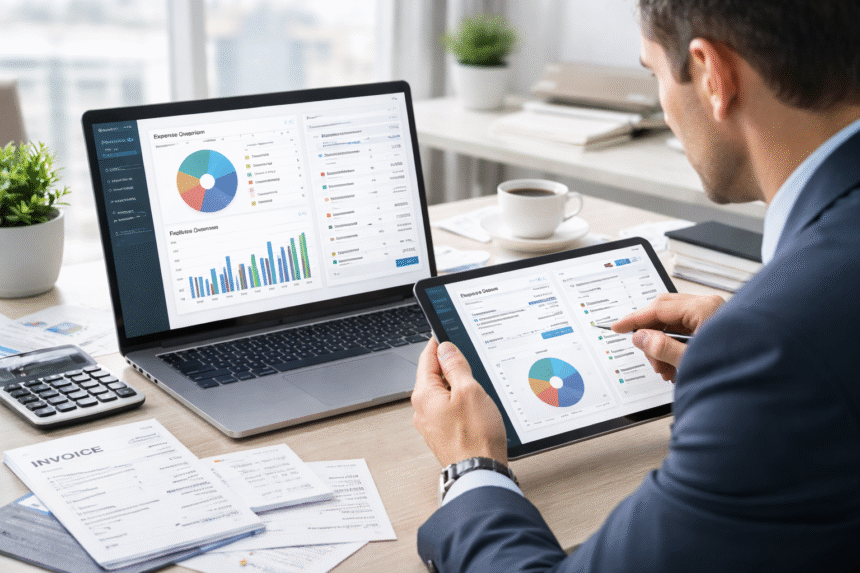
In today’s competitive business world, one of the most important things for companies to do is keep track of their money. Every business, no matter how big or small, needs to keep an eye on its spending to stay profitable, legal, and long-lasting. As companies get bigger, it gets harder and less efficient to keep track of expenses by hand. Paper receipts, spreadsheets, and separate approval processes can all cause mistakes, delays, and a lack of clear financial information. This is why a lot of companies are now using business expense software as a long-term way to keep track of and control their costs.
Managing expenses is no longer just a job for accountants. It has a direct impact on making decisions, budgeting, keeping employees happy, and following the rules. A good expense management system helps businesses be more open, lower their financial risk, and run their operations more smoothly. This guide clearly and logically explains what expense management solutions are, why they are important, how they work, their benefits, and what they could do in the future.
How to Understand Expense Management in Today’s Businesses
Expense management is the process of keeping track of, approving, and paying back costs that employees incur while doing business. Some of these costs could be for travel, office supplies, client meetings, subscriptions, and other costs of running a business. Expenses that aren’t handled well can quietly take away from a company’s resources and make financial reports less accurate.
In the past, employees had to fill out expense reports by hand, usually on paper or in spreadsheets. Managers look over these reports and then send them to the finance team to be paid back and kept on file. This method is slow, makes a lot of mistakes, and is hard to scale. Businesses have a hard time keeping things accurate and consistent as the number of transactions goes up.
Digital expense management tools make this whole process automatic and central. Companies can replace manual processes with digital systems that are more efficient and make sure that all departments are accurate, open, and responsible by using business expense software.
What is software for business expenses?
Business expense software is a digital tool that automates the whole process of managing expenses. It lets employees keep track of their expenses, upload receipts, and file claims all in one place. Managers can look at and approve expenses right away, and finance teams can keep an eye on spending, make reports, and make sure that company rules are being followed.
Most of the time, these platforms are cloud-based, which means you can access them from anywhere and on any device. Employees can record expenses as they happen with mobile functionality, which lowers the chance of losing receipts or submitting them late. Automated data extraction and categorization make things even easier and more accurate.
Businesses get a complete picture of their finances by combining expense data with accounting and payroll systems. This integration makes sure that expense data goes smoothly into financial records, which makes it easier to report and get ready for an audit.
The Importance of Managing Expenses for Keeping Your Finances in Check
To stay financially disciplined, you need to manage your expenses well. Small, recurring costs can add up to big losses if they aren’t watched closely. Businesses can’t keep an eye on their costs, plan their budgets, or guess how much they’ll spend in the future if they can’t see their expenses clearly.
Expense management systems let you see how much money you’re spending in real time. Finance leaders can keep an eye on costs in different departments, projects, and time periods. This information helps businesses find areas where they are wasting money, set spending limits, and make sure that their spending is in line with their strategic goals.
Another important factor is compliance. Tax laws, financial rules, and internal policies apply to many businesses. An organized way to manage expenses makes sure that they are recorded correctly and follow the rules set by the law and the company.
How to Use Expense Management Software in Real Life
Expense management software has a set workflow that makes it easier and faster to handle expenses. Employees start by entering their expenses through a mobile app or web portal. You can upload receipts right away, and important information like the amount, date, and category is automatically saved.
After you submit your expenses, they go to the right manager for review. You can change approval workflows based on roles, departments, or types of expenses. Even when they are not in the office, managers can quickly approve or deny expenses.
The finance team records expenses in the accounting system and processes reimbursements after they have been approved. Reports are generated automatically, providing detailed insights into spending behavior. This streamlined process cuts down on delays, gets rid of unnecessary tasks, and makes sure that financial records are correct.
Why You Should Use Expense Management Software
One of the best things about digital expense management is that it makes things more accurate. Automation cuts down on human mistakes by making it less likely that people will have to enter data by hand. It is easier to check expenses and stop claims from being made twice when receipts are stored digitally.
Another big benefit is that it saves time. Employees spend less time writing reports, managers approve expenses more quickly, and finance teams process reimbursements with little effort. This efficiency makes the reimbursement process go faster and makes employees happier.
Expense management systems also make it easier to see where money is going. Dashboards and reports that update in real time show exactly where money is going. This information can help decision-makers keep costs down and make budgeting more accurate.
Companies can consistently enforce their spending rules by using business expense software. Built-in rules stop unauthorized expenses and flag policy violations before reimbursements are processed.
Managing costs and making employees happy
The experience of employees is very important for overall productivity and retention. Employees often get angry with complicated expense reporting processes, especially when they have to wait for their money back. A simple and easy-to-use expense management system makes it easier for employees to submit expenses quickly and easily.
Employees can record expenses right away when they can access them on their phones, which makes things easier for the office. Faster approvals and reimbursements make people feel better and build trust. When workers know that their systems are working well, they are more likely to focus on their main tasks.
The software’s built-in clear expense rules also help to clear up any confusion. Employees know what expenses they can claim, how to do it, and when they will get their money back.
Managing costs for small and medium-sized businesses
Small and medium-sized businesses often don’t have a lot of money to work with. Every cost is important, and bad tracking can quickly hurt your bottom line. A lot of small businesses use spreadsheets or simple accounting tools that don’t have advanced features for managing expenses.
Small businesses can have professional-level control over their finances without the hassle of enterprise systems thanks to expense management software. Automated workflows cut down on administrative work and give you more time to focus on activities that help your business grow.
Small business owners can make smart choices about spending, pricing, and investing when they can see their costs clearly. Digital records also make it easier to do your taxes and financial audits.
Managing Expenses for Big Businesses
Because of how big and complicated their operations are, big businesses have problems that are different from those of small businesses. To keep track of costs across many departments, locations, and currencies, you need strong systems and strict controls.
Enterprise-level expense management solutions come with advanced features like custom approval hierarchies, detailed analytics, and the ability to connect with enterprise resource planning systems. These features help businesses stay consistent and follow the rules throughout the whole company.
Business expense software also helps businesses that work around the world by handling different currencies, tax laws, and rules. This makes sure that reports are correct and lowers the risk of not following the rules in international markets.
Expense management systems that protect data and keep it safe
Every business should make sure that its financial data is safe. Expense management systems deal with private data like employee information, transaction records, and financial reports. Advanced security measures are used by trustworthy platforms to keep this data safe.
Encryption keeps data safe while it is being sent and while it is stored. Only authorized users can see sensitive information with role-based access controls. Audit trails keep track of all changes, making sure that people are responsible and open.
Following data protection rules builds even more trust. Businesses can meet legal requirements and protect their financial health by using secure expense management systems.
How Expense Data Helps Make Strategic Decisions
Data on expenses is more than just a record of what you spent in the past. When looked at in the right way, it can give you useful information about how well your business is doing. Expense management systems make detailed reports that show trends, patterns, and ways to cut costs.
Finance teams can look at expense data to find areas where costs are high, figure out how much money they will make, and change budgets as needed. This information can help leaders with strategic planning and allocating resources.
Companies can use business expense software to get accurate and up-to-date information that helps them make decisions before problems happen instead of after they happen.
Linking with accounting and financial systems
Integration is a very important part of managing expenses well. When systems are separate, they make data silos and raise the chance of mistakes. Expense management software works perfectly with tools for accounting, payroll, and financial planning.
This integration makes sure that expense data goes straight into financial records, which cuts down on the need for manual reconciliation. It also makes audits easier and makes reports more accurate.
Unified financial systems give you a complete picture of how your business is doing, which makes it easier to keep track of cash flow, see how profitable you are, and meet compliance requirements.
Best Practices for Implementation and Adoption
To successfully use expense management software, you need to plan and talk to each other carefully. First, businesses should make clear rules about expenses and how to get them approved. The system should show these policies to make sure they are all the same.
Training employees is necessary for adoption. Users should know how to submit expenses, upload receipts, and check the status of their reimbursements. Ongoing help and feedback make the system easier to use and more useful.
Businesses can find ways to improve and make sure they are successful in the long term by keeping an eye on how their systems work and how users behave.
Problems with managing expenses and how software can help
A lot of businesses have trouble with approvals that take too long, receipts that get lost, and policies that aren’t always followed. It’s hard to keep track of expenses and deal with problems quickly when you use manual systems.
Expense management software solves these problems by automating processes and putting all the data in one place. Notifications in real time make sure that approvals happen on time, and digital storage makes sure that documents don’t get lost.
Rules for enforcing policies stop people from spending money they shouldn’t before it happens. This proactive approach lowers the risk of losing money and makes everything work better.
Future Trends in Technology for Managing Expenses
As technology gets better, expense management keeps changing. Expense management systems are getting better by adding artificial intelligence and machine learning to them.
Future solutions will include predictive analytics, which will help businesses better plan their budgets and see how spending patterns are likely to change. Automated fraud detection will make security and compliance even better.
Mobile features will keep getting better, making it easy for employees to manage their expenses from anywhere. These new ideas will make managing expenses smarter, more proactive, and more strategic.
Questions that are often asked
What is the main goal of software for managing expenses?
The main goal is to automate the tracking, approval, and reimbursement of business expenses while also making the process more accurate and clear.
Is it hard to use software for managing expenses?
Most modern platforms have easy-to-use interfaces that make it easy for everyone to submit and approve expenses.
Can software for managing expenses help cut costs?
Yes, businesses can find unnecessary costs and keep costs down by making spending patterns clear and enforcing rules.
Are the expense records safe in these systems?
To keep sensitive financial data safe, reliable expense management systems use encryption, access controls, and audit trails.
How does software for managing expenses help businesses grow?
It gives businesses the ability to make smart decisions as they grow by giving them scalable processes, real-time insights, and financial control.
Final Thoughts
Managing expenses is an important part of making money in today’s businesses. Today’s expenses are too complicated and too many for manual processes to handle. Digital solutions give you the structure, automation, and information you need to keep track of your spending.
Companies can get more accurate, save time, follow the rules better, and get useful financial information by using business expense software. Investing in a strong expense management system helps businesses of all sizes, from small to growing to enterprise-level, stay stable and make smart decisions over the long term.