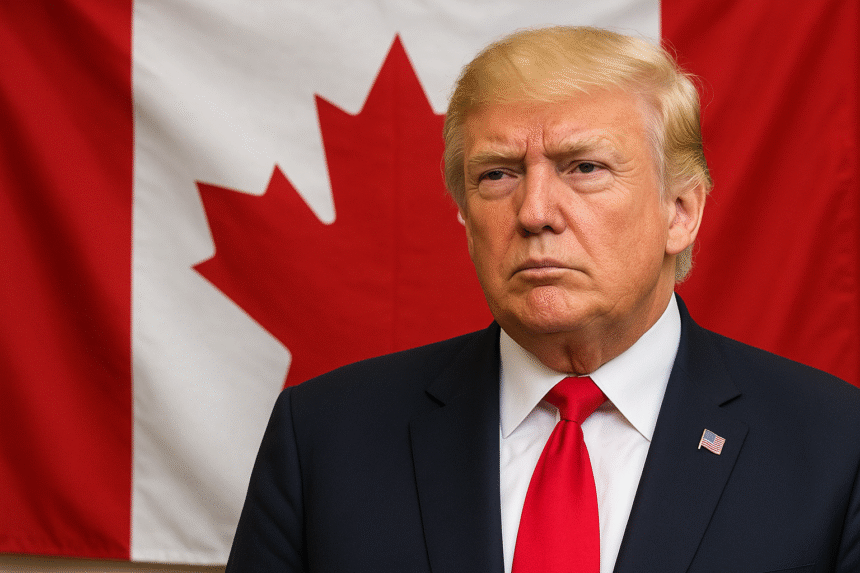
In the middle of 2025, Donald Trump suddenly stopped all trade talks with Canada. This happened after Canada put a 3% Digital Services Tax on money made by U.S.-based tech companies like Google, Amazon, Meta, Uber, and Airbnb. Trump called the tax an unfair and direct attack on American businesses and said he would put new tariffs on Canadian goods. Because of this pressure, Canada canceled the tax and promised to get rid of it through legislation, which put a stop to its first planned collection. Analysts said that Canada had used the tax as a bargaining chip, giving it up to reach bigger trade and economic goals. The disagreement showed how weak the economic ties between the U.S. and Canada are and how political pressure can affect trade policies around the world.
Donald Trump and Canadian Prime Minister Mark Carney’s recent meeting at the White House has become the most talked-about event in world politics. The meeting between Trump and Canada wasn’t just a diplomatic visit; it was a sign that the two countries were changing the way they interact with each other in response to changes in the world.
For a long time, Trump and Canada have been a complicated mix of partners, rivals, and negotiators. The meeting in 2025 was an effort to restore trust, settle trade disputes, and come to an agreement on energy, tariffs, and sovereignty.
Let’s look into what really happened at this highly publicized Trump Canada event and what it means for the future of both countries.
1. The Background: How Trump and Canada Got Here
Donald Trump’s tough stance on trade changed the way the U.S. and Canada got along when he first entered politics. The tariffs his administration put on Canadian steel, aluminum, and car parts changed trade in North America.
Mark Carney, a former Governor of the Bank of England and a financial expert, became Prime Minister with the promise to protect Canadian businesses while keeping lines of communication open with Washington.
As tensions rose, it became clear that a face-to-face meeting was necessary. Because of this, the Trump Canada White House meeting became one of the most talked-about events of 2025.
2. Important things that happened at the Trump Canada meeting
A. A Friendly Handshake with Hidden Tension
At first, the meeting between Trump and Canada looked friendly. Both leaders smiled at each other and praised each other’s leadership. Trump said Carney was “very smart,” and Carney stressed “the importance of American partnership.”
But there were heated discussions behind the scenes. Trade tariffs, energy cooperation, and Canada’s right to make its own decisions about future policies were some of the most important issues on the table.
B. Canada Is the Most Important Country
When Trump joked that Canada could become “America’s 51st state,” it was probably the most talked-about moment.
Carney quickly said, “Canada is not for sale, now or ever.”
That comment quickly spread, showing how strongly Canada felt about independence and self-determination. This exchange added a new chapter to the ongoing Trump Canada debate, balancing diplomacy with national pride.
C. Talking about trade and tariffs
Trade was the most important thing. Trump said again that tariffs protect American jobs, while Carney pushed for better trade conditions.
Even though they didn’t reach a trade deal, the two countries agreed to set up a joint task force to look into tariff structures and ways to work together economically, especially in the automotive, steel, and technology sectors.
Experts say that this is the first step toward better trade between Canada and Trump, even though there are still a lot of problems to solve.
D. The Energy Factor
Energy cooperation was also a big deal. Trump said he was once again interested in bringing back the Keystone XL pipeline, which had been put on hold because of environmental concerns. Carney said that Canada would only think about joining if it fit with the country’s climate goals.
This shows a possible future where Trump’s talks with Canada about energy could bring together economic and environmental interests. If done right, this would be a rare win-win.
3. The meeting between Trump and Canada had effects on politics and the economy.
A. Economic Uncertainty for Both Countries
The meeting helped people talk to each other, but both sides’ industries are still unsure. Canadian exporters still have to pay tariffs, and American companies that rely on Canadian imports want to know what’s going on.
Economists say that getting rid of some important tariffs could increase trade by up to $20 billion a year, which would make both economies stronger under the Trump Canada trade framework.
B. Carney’s Political Boost in Canada
Carney’s strong defense of Canada’s sovereignty boosted his reputation at home. Many Canadians liked how calm and firm he was, seeing it as a win for national pride and diplomatic balance.
The way he handled the Trump Canada conversation showed that he was a leader who could stand up to Washington while still keeping lines of communication open.
C. Trump’s Strategic Move Before the Elections
The Trump Canada meeting has another purpose for Donald Trump: it shows that he is a leader before the 2026 election cycle. By talking to Canada, Trump showed that he was a global negotiator who could protect American interests while keeping international alliances.
4. What Experts Think About this Meeting
Political experts say that the Trump Canada meeting didn’t lead to any real trade deals, but it did help restore communication between the two countries.
Trade experts say that this is a strategic reset between two allies who have often disagreed but still depend on each other economically.
People also say that Carney’s strong stance could affect future talks, possibly making the U.S. have to back off on some of its tariff positions in order to keep working together across borders.
5. What’s Next for Trump-Canada on the Road Ahead
The partnership between Trump and Canada is not easy at all. In early 2026, the two countries plan to meet again to talk about:
- Changing tariffs and working together on the economy
- Partnerships for clean energy
- Working together on cybersecurity
- Trade flow and managing the border
If these talks go well, North America could enter a new era of economic stability based on respect and smart negotiations.
6. How the world reacted to the Trump-Canada talks
The response from around the world has been mixed. European allies praised Carney’s support for independence, and Asian markets kept a close eye on any changes in trade between the U.S. and Canada.
A lot of people think that how Trump and Canada get along could change how trade works around the world, especially in the steel, energy, and auto industries.
Final Thoughts
The meeting between Trump and Canada has shown that diplomacy between two strong neighbors is still complicated but very important. Even though no big deal came out of the talks, they laid the groundwork for future cooperation based on realism instead of competition.
This was a time for Canada to be proud. It was another step for Trump toward changing how America interacts with the rest of the world.
One thing is for sure: the future of U.S.-Canada relations will have a big impact on politics in North America for years to come.
5 Questions About Trump Canada
1. What does the phrase “Trump Canada” mean?
“Trump Canada” is a term that describes the diplomatic and trade ties between Donald Trump, the former president of the United States, and the Canadian government, especially after their meeting in the White House in 2025.
2. What did they talk about at the meeting?
Some of the topics were trade tariffs, working together on energy, and Canada’s right to make its own political decisions.
3. Did the meeting lead to a new trade deal?
No, but both sides agreed to keep talking and set up a task force to work together in the future.
4. What was important about the meeting between Trump and Canada?
It was a turning point in diplomatic relations because it showed that Canada was independent and that Trump was willing to talk about trade again.
5. What’s next for Canada and Trump?
Future talks will be about getting rid of trade barriers, moving forward with clean energy, and making the economies of North America more stable.