The way businesses handle invoices is changing a lot because speed, accuracy, and efficiency are so important in the business world. The old-fashioned way of handling invoices on paper is quickly becoming out of date. Fintech Automated Invoice Processing is a new way for businesses to handle their accounts payable that uses financial technology, artificial intelligence (AI), and automation to make things easier.
This guide will teach you everything you need to know about fintech automated invoice processing, including how it works, why it matters, its benefits, and how to use it successfully. It will help you cut costs, improve cash flow, and modernise your finance function.
What does it mean to process invoices automatically with Fintech?
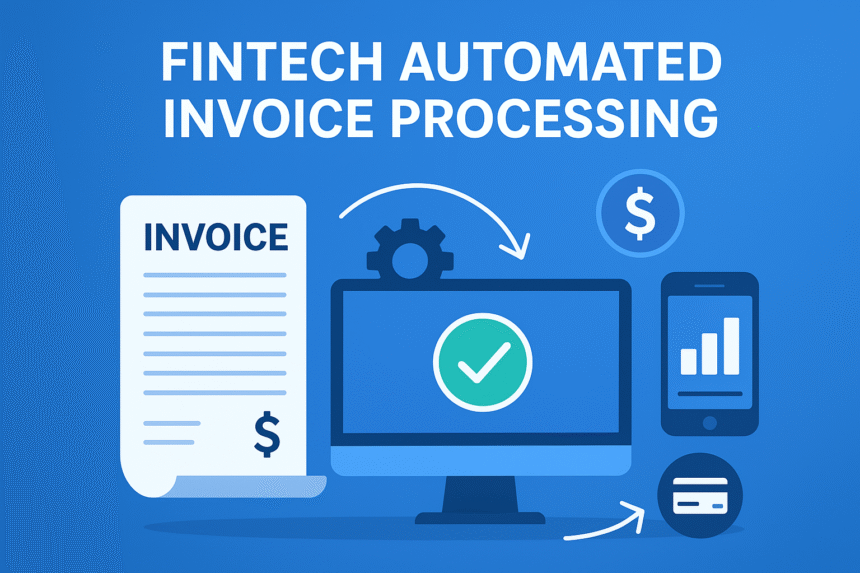
Fintech Automated Invoice Processing means using financial technology tools, such as automation, artificial intelligence (AI), machine learning (ML), and optical character recognition (OCR), to handle all parts of an invoice’s life cycle digitally.
Fintech invoice automation lets businesses capture, validate, approve, and pay invoices with little or no human involvement, instead of having to enter data by hand, check invoices, and chase approvals.
In short, it replaces the old, slow process with a quick, digital, and error-free workflow. This gives businesses real-time visibility and control over their financial operations.
How Fintech Handles Invoices Automatically
Let’s take a look at how fintech automated invoice processing works from start to finish to really understand how powerful this technology is.
1. Getting invoices
You can get invoices from a number of places, such as email, vendor portals, or scanned copies. Using OCR and AI, the fintech system automatically collects data from all types of invoices (PDF, image, XML) and turns it into structured digital data.
2. Getting and checking data
After being captured, the system pulls out important information like the invoice number, supplier name, dates, line items, and tax amounts. Advanced algorithms then check this information against receipts and purchase orders to make sure it is correct and follows the rules.
3. Automating Workflows
After they are checked, the invoices go through approval workflows that have already been set up. You can change the rules based on departments, spending limits, or the amount of the invoice. Approvers get instant notifications by email or mobile apps, which lets them approve things right away.
4. Working with ERP and accounting systems
When you approve an invoice, it automatically connects to ERP or accounting software like SAP, Oracle, QuickBooks, or NetSuite. This smooth integration gets rid of the need for manual data entry and makes sure that financial reports are correct.
5. Processing payments and making sure they match up
Payments are automatically scheduled once they are approved. The system makes sure that payments are made on time while keeping accurate records, audit trails, and following tax and regulatory rules.
6. Analytics and Making Things Better All the Time
Modern fintech solutions come with smart analytics that keep an eye on costs, processing times, and exceptions. Machine learning keeps making the process better, making it faster and more accurate over time.
The Best Things About Fintech Automated Invoice Processing
Using fintech to automate invoice processing has many operational, financial, and strategic benefits that go beyond just making things run more smoothly.
1. A big drop in time and money spent
Processing invoices by hand takes a lot of time and money. It costs about $25 to $30 to process one invoice by hand. Fintech automation can cut costs by up to 80% and speed up the processing of invoices from days to hours.
2. More accurate and fewer mistakes
Automation cuts down on the amount of data that people have to enter by hand, which lowers the number of mistakes that happen when people do it by hand or miss something. AI and validation rules automatically find duplicate or fake invoices, which keeps your financial data clean and accurate.
3. Shorter times for approval
Fintech automation speeds up the time it takes to approve invoices by getting rid of manual routing. With secure mobile or cloud-based systems, approvers can look at and approve invoices from anywhere and at any time.
4. Better cash flow and financial visibility
Finance teams can better manage cash flow when they can see invoice data in real time. They can predict payments, find discounts for early payments, and avoid late fees, all of which will improve the organization’s financial situation.
5. Better relationships with suppliers
Paying suppliers on time builds trust and makes partnerships stronger. Fintech automated invoice processing makes payments on time and clear, which lowers the number of disputes and keeps suppliers happy in the long run.
6. Easier to follow the rules and check up on
Every step of the invoice process, from sending it to paying it, is tracked online. This makes a full, traceable audit trail that helps you follow tax laws, industry standards, and data protection laws like GDPR.
7. Business agility and scalability
The number of invoices goes up as businesses grow. Fintech automation can easily handle thousands of invoices without needing more staff or delays, while manual processes can’t keep up.
8. Increased Productivity
By automating tasks that are done over and over, finance teams can spend more time on important tasks like budgeting, forecasting, and strategic analysis. This makes people feel better, work harder, and do better overall for the business.
Why Companies Are Using Fintech to Automate Invoice Processing
The digital transformation wave has made automation a need, not a want. Businesses are under pressure to do more with less, and fintech automated invoice processing helps them find that balance.
Today, businesses deal with:
- A lot of invoices from different suppliers and currencies
- Teams that work from home or in a hybrid way and need digital workflows
- More and more demands for compliance and audits
- The need for cost-effectiveness and up-to-date financial information
Companies can scale up, stay compliant, and make better financial decisions while lowering their operating costs by using fintech to automate their invoice management.
How to Set Up Fintech Automated Invoice Processing
If your business is ready to move from processing invoices by hand to doing it automatically, here is a clear path to take:
1. Look at how you currently work
Figure out how invoices move through your business right now. Find problems like delays in getting approval, data entry bottlenecks, and mistakes that happen over and over again.
2. Set Your Goals
Establish quantifiable objectives, such as decreasing processing time by 60% or enhancing accuracy to 99%. These KPIs will help you see how well you did after you put them into action.
3. Pick the Right Fintech Partner
Choose a fintech company that has a lot of experience with automation. Look for things like AI-based data capture, integration with ERP systems, mobile approvals, and strong data security.
4. Get your data ready and clean it
Make sure that vendor records, purchase orders, and payment information are all correct before automating. Clean, consistent data makes it easier to integrate and improves system performance.
5. Test the System
Try out the new process in one department first with a pilot project. Look at the results, make changes, and get feedback from users.
6. Full-Scale Implementation
After a successful trial, put the solution into all departments. Give everyone training and user guides to make sure they understand the new process.
7. Keep an eye on things and make them better
Keep an eye on performance metrics like cycle time, exception rate, and cost per invoice. Use system analytics to find places where you can always get better.
Problems and how to deal with them
Fintech automation can be very helpful, but it can also be hard to put into place. The key is to be ready and manage things ahead of time.
System Integration: Pick a platform with flexible APIs that works well with your current accounting or ERP software.
User Adoption: Get your finance teams on board by training them and making sure they understand the benefits of automation.
Supplier Engagement: Ask suppliers to send in digital invoices and point out the benefits of faster payment.
Data Security: Work with fintech companies that follow strict security rules like ISO 27001, GDPR, or SOC 2.
If you think ahead about these problems, your move to automated invoice processing in fintech will go smoothly and be a success.
How Fintech Automation Affects the Real World
Fintech automation has already shown its power to companies all over the world in many different fields. Businesses say that their manual work has gone down by up to 80%, their processing times have gone up by 65%, and they save a lot of money on each invoice.
Automation not only makes things run more smoothly, but it also improves compliance, builds trust with suppliers, and makes finances more open, all of which help businesses make faster, data-driven decisions.
The Future of Automated Invoice Processing in Fintech
The next generation of fintech automation is taking things even further. In the future, there will be:
- AI-powered forecasting to figure out how much cash flow you need
- Smart contracts based on blockchain for transactions that are clear and can’t be changed
- Using predictive analytics to find patterns in spending
- Hyper-automation is the use of RPA, AI, and ML together to completely change the way money works.
In short, fintech automated invoice processing is more than just an upgrade to technology; it’s the start of a smarter, more connected financial future.
Common Questions About Fintech Automated Invoice Processing
1. What is the main purpose of fintech automated invoice processing?
The main goal is to make handling invoices easier and more digital, reducing the amount of work that needs to be done by hand while increasing speed, accuracy, and cost-effectiveness.
Q2. Is it a good idea for small businesses to use fintech to automate their invoices?
Yes. Not just big companies, but also small and medium-sized businesses can afford and use automation thanks to cloud-based solutions.
Q3: How safe is processing invoices automatically?
To keep financial data safe, modern fintech systems use strong encryption, secure data centres, and compliance frameworks like GDPR and ISO certifications.
Q 4: How long does it take to put into action?
Depending on how complicated your systems are, it can take 6 to 12 weeks to fully implement them, including testing and training.
Q5. Does it take the place of the finance team?
Not at all. It gives them power. Automation takes care of repetitive data entry tasks so that teams can focus on strategy, analysis, and managing vendors.
Q6. What return on investment can companies expect?
Companies usually see a return on investment (ROI) in 6 to 9 months because costs go down, payments come in faster, and they can see their finances more clearly.
In conclusion
In a time when being efficient and accurate is what makes a business competitive, Fintech Automated Invoice Processing is more than just a new technology; it’s a must-have for any business. It makes accounts payable easier, cuts down on mistakes, increases transparency, and gives businesses full control over their money.
If you use fintech to automate your invoice processing today, it will help you run your business more efficiently in the future, no matter how big or small it is. Digital technology is the future of finance, and automation is at the forefront.