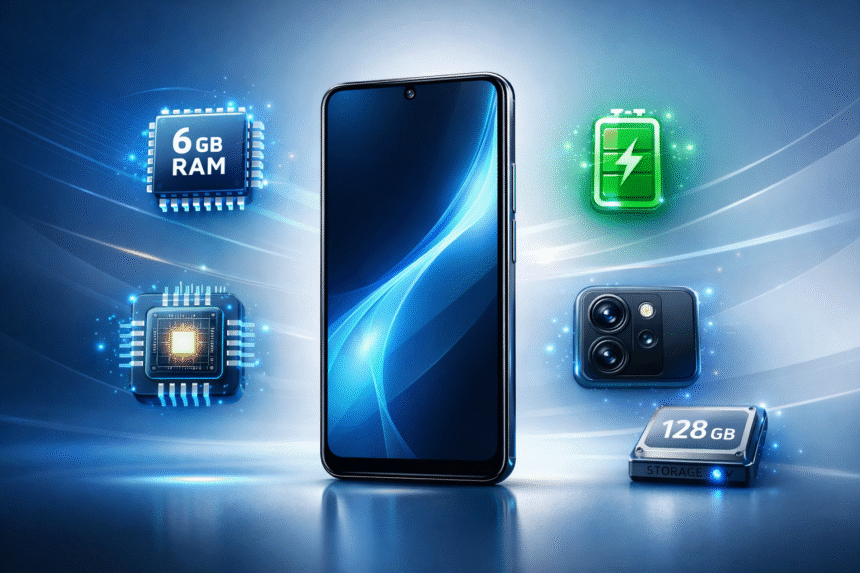
“Beginner’s Guide to Understanding Smartphone Specifications”in this article we discuss about it in details.Smartphones are an important part of our daily lives. We use them to talk to people, have fun, work, and more. But for a lot of new users, the specs on a smartphone box or website can be too much to take in. It’s hard to pick the right device when terms like RAM, processor, battery capacity, storage, and megapixels are often hard to understand.
The goal of this Beginner’s Guide to Understanding Smartphone Specifications is to make these technical details easier to understand so you can make smart choices when you buy your next phone. You can choose a device that meets your needs, budget, and lifestyle without getting lost in marketing jargon if you know the basic specs and how they affect daily use.
Why it’s important to know what a smartphone’s specs are
Smartphone specs aren’t just numbers; they show how your phone will work in the real world. If you know these specs, you can make sure you buy a phone that meets your needs, whether you need it for gaming, taking pictures, browsing the web, or just talking to people. Many people end up spending more money on features they don’t need or picking a device that doesn’t work well for their needs without this information.
You can avoid common mistakes and make a choice that will make you happy for a long time by looking at the processor speed, RAM, storage space, display quality, camera features, battery life, and connectivity options. The specifications also affect how long your device will last, so you can enjoy smooth performance for many years.
Learning about the processor
The CPU, or processor, is the brain of your phone. It can do everything, from opening apps to running several programs at once. How fast and responsive your device feels depends on how well the processor works.
High-end processors like the Qualcomm Snapdragon 8 series or Apple’s A-series chips work better than lower-end ones, making them great for gaming, video editing, and doing more than one thing at a time. For everyday tasks like browsing the web, using social media, streaming videos, and playing light games, mid-range processors are fine. Knowing how a smartphone’s processor works can help you guess how well it will handle your daily tasks. A powerful processor can also help the battery last longer by handling tasks better.
What RAM Does
Random Access Memory (RAM) is a very important part of a smartphone that affects how well it can run multiple apps at once. It is the memory your phone uses to run active processes for a short time.
2 to 4GB of RAM is usually enough for basic tasks like calling, texting, and browsing the web. People who often use resource-heavy apps, play mobile games, or do more than one thing at a time will benefit from 6 to 8GB of RAM. People who use their computers a lot, make content, or work in a professional setting may want 12GB or more. But having more RAM doesn’t always mean better performance. The speed at which your device works is ultimately determined by a combination of its RAM, processor, and software optimization.
What does storage capacity mean?
Storage is the amount of space on your phone that apps, media, and files can use. Most modern devices have storage options that go from 32GB to 1TB.
A 32GB device might be fine for people who don’t have many apps or media, but most people who store photos, videos, and apps on a regular basis will need a device with 128GB to 256GB of storage. People who record videos in high definition or download big apps may need 512GB or more. Some smartphones have microSD card slots that let you add more storage, but most modern phones only have internal memory. To avoid running out of space, which can slow down your computer and make you angry, you need to know what your storage needs are.
Display and Visual Experience
The display is the part of your smartphone that you use to interact with it, and it affects both how easy it is to use and how fun it is to use. Size, resolution, and panel type are all important things to think about.
Larger screens are better for watching videos, playing games, and doing more than one thing at once. Smaller screens are easier to carry around. Resolution affects sharpness, and Full HD or higher gives you clear, sharp images. The type of display—AMOLED, OLED, or LCD—affects how bright the colors are, how well they contrast, and how well you can see them from different angles. A good display makes it fun to use your phone for both work and play.
Details about the camera
Many people who buy smartphones care a lot about the quality of the camera. People often talk about megapixels, but they aren’t the only thing that affects image quality. The lens, sensor size, aperture, and software processing all have a big impact.
A lower f-number means a bigger aperture, which lets more light into the camera and makes it work better in low light. Modern smartphones have a lot of lenses, like wide, ultra-wide, and macro, which lets you take a lot of different kinds of pictures. The ability to record video, like in 4K resolution or slow motion, also has an effect on how well the device works. Knowing what the camera specs are will help you choose a phone that is good for taking pictures and videos.
How long the battery lasts and how to charge it
The milliampere-hours (mAh) rating of a battery tells you how long a smartphone can run on a single charge. Bigger batteries usually last longer, but how long they last depends on how well the processor works, how high the screen resolution is, and how many apps you use.
A battery with 3000 to 4000 mAh can last a normal user all day, but heavy users or gamers should get a battery with 5000 mAh or more. Fast charging is now a must-have feature because it lets devices charge quickly and reduces downtime. Checking the specifications of your battery makes sure that your smartphone can handle your daily tasks without too many interruptions.
OS, or Operating System
The operating system is the software that runs your phone. It controls how it looks, how it works, and which apps it can run. The market is mostly made up of Android and iOS. Android lets you customize a lot of things, works on a lot of different devices, and gives you access to a lot of apps. iOS offers a smooth and consistent user experience, regular updates, and strong security features. Beginners should think about which OS works best with their preferences, the devices they already own, and how long they plan to use it.
Choices for connectivity
Smartphone connectivity features tell your phone how to connect to the internet, networks, and other devices. Bluetooth lets you connect your phone to headphones, speakers, or smart devices, while Wi-Fi 6 and 5G let you use the internet on your phone quickly and reliably. With NFC technology, you can make payments and send data quickly without touching anything. When you choose a smartphone with the right connectivity options, it will be easy to use and fit in with your lifestyle.
Things People Get Wrong About Smartphone Specs
There are a lot of myths that new people believe. One is that more megapixels always mean a better camera. In reality, the quality of the lens, the size of the sensor, and the processing power of the software are more important. Another common misconception is that more RAM always means faster performance. Speed is also greatly affected by optimizing the CPU and software. The battery life isn’t just based on the battery’s capacity. The screen resolution, processor, and how you use it all affect how much power it uses. Knowing about these myths will help you make smart choices and pay attention to the specs that really matter.
How to Tell the Difference Between Smartphones
When you compare smartphones, look at the specs that are most important to you. People who play video games should care more about how well the processor and GPU work, while people who love photography should care more about how good the camera is and how much storage it has. Professionals or travelers may need a long battery life, while people who watch videos may care more about the quality of the display. Think about the operating system and the ways to connect to make sure they work with your ecosystem. When you compare devices carefully, you can find one that strikes the right balance between price, performance, and features.
Questions that come up a lot (FAQs)
Q1: What is the most important feature of a smartphone?
What you use it for will determine the most important specification. Gamers should care most about the processor and RAM, photographers should care most about the camera’s features, and heavy users should care most about battery life.
Q2: Does having more RAM always make things work better?
Not always. More RAM lets you do more things at once, but the processor and software optimization also affect performance.
Q 3: How much memory do I need on my phone?
64GB might be enough for people who don’t use it much. Moderate users should think about getting 128GB to 256GB, while heavy users or content creators may need 512GB or more.
Q4: Is a camera with more megapixels always better?
No. Megapixels only tell you how clear an image is. The quality of the lens, the size of the sensor, the size of the aperture, and the software processing all have a big impact on the quality of the photo.
Q5: How important is the size of the battery?
Battery capacity is important, but how well a device works in the real world depends on how well the processor works, the screen resolution, and how you use it. Fast charging can also make up for batteries that are smaller.
In conclusion
To make smart buying decisions, you need to know what the specs of a smartphone are. You can choose a device that fits your lifestyle and works best by looking at important features like the processor, RAM, storage, display, camera, battery, operating system, and connectivity. The Beginner’s Guide to Understanding Smartphone Specifications makes it easier to understand and choose from the many options available in the smartphone market. Keep in mind that the best smartphone for you is the one that meets your needs, not the one with the most features or the highest price. You can be sure that you are making the right choice when you use this information to pick a device that will last for years.