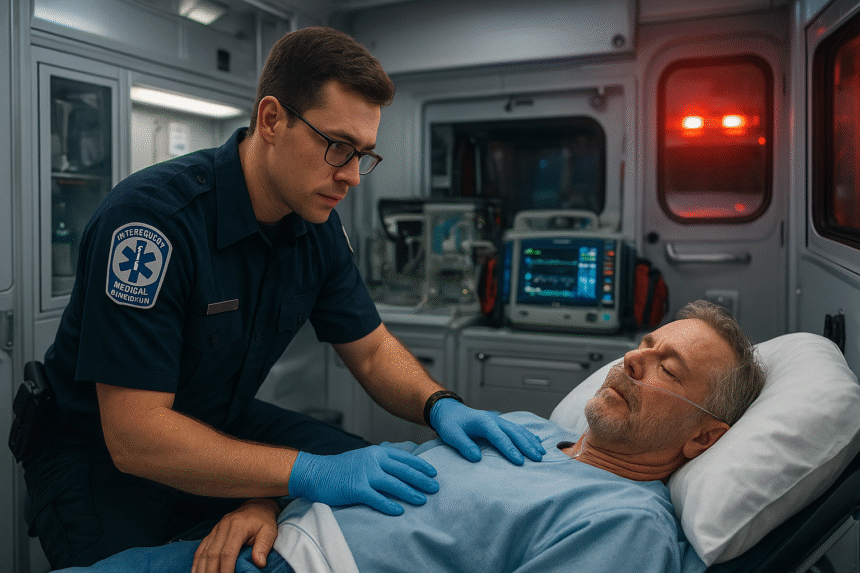
There is a growing need for skilled emergency medical professionals all over the world. As healthcare systems get bigger, more hospitals, ambulance services, and trauma centres need trained people who can respond quickly to emergencies. The Emergency Medical Technology course is now one of the best career options for students who want to work in critical care and save lives in a changing medical field.
Students who take this course will be ready to become Emergency Medical Technicians (EMTs), who are the first people to respond to medical emergencies. EMTs are very important in stabilising patients and making sure they get to the hospital safely after a car accident, a heart attack, a traumatic injury, a natural disaster, or any other emergency. They need to be able to work quickly, make decisions quickly, and have strong clinical skills. This is why more and more students are choosing the Emergency Medical Technology course as a way to get a meaningful and respected job in medicine.
What is a course in emergency medical technology?
The Emergency Medical Technology course is a specialised program for paramedics that teaches them how to provide emergency care and medical help before they get to the hospital. Students learn how to evaluate patients, handle emergencies, give basic and advanced life support, and use emergency equipment. The goal of the course is to train professionals who can handle emergencies in real life with skill and confidence.
The EMT course is different from many other medical courses because it focusses on hands-on learning instead of theory. Students spend a lot of time in simulation labs, ambulances, trauma units, and emergency rooms. They learn how to act quickly and correctly in life-threatening situations through this hands-on experience. This makes the course a good fit for people who love helping others and want to work in a
Why the Emergency Medical Technology Course is Important Now
There has been a quick rise in emergency cases in the healthcare industry. There are more and more road accidents, heart attacks, breathing problems, natural disasters, industrial injuries, and medical emergencies. Hospitals and rescue departments depend on EMTs to handle these situations well.
The fact that EMTs are the first link in the chain of survival is what makes the job so important. The first things an emergency technician does can often mean the difference between life and death for a patient. With the right training, EMTs can save many lives by stopping things from getting worse before more advanced medical care is available.
Students who take the Emergency Medical Technology course feel accomplished, respected, and like they have a purpose in their careers. It also has a stable job market, many chances to grow, and the chance to get advanced certifications later.
Requirements for the Emergency Medical Technology Course
Most schools that offer the Emergency Medical Technology course want students to have finished their 10+2 education. Some schools let students from other streams into certificate-level programs, but the science stream with Physics, Chemistry, and Biology is the most popular. Most of the time, the age limit is between 17 and 35, so both young people who just graduated and adults can take the course. EMTs need to be able to communicate well, be physically fit, and be emotionally stable because they often work in stressful situations where staying calm and clear is very important.
Different kinds of emergency medical technology classes you can take
There are different levels of EMT courses you can take based on your career goals and how much school you have already completed. Most certificate courses last six months to a year and teach basic emergency care skills. Students who want more training often choose a one- to two-year Diploma in Emergency Medical Technology. This program includes clinical internships, ambulance operations, and emergency procedures.
If you want to work in emergency medicine for a long time or want to be a supervisor or specialist, getting a bachelor’s degree in Emergency Medical Technology is a great idea. This degree lets you study trauma care, pharmacology, critical care, and emergency management at a higher level. Every course, no matter what level, has the same goal: to get students ready to handle real emergencies in a professional and effective way.
The course outline for Emergency Medical Technology
The lessons mix theory with hands-on practice. Students start with basic subjects like human anatomy and physiology, which teach them how the body works in emergencies. They also learn how to assess patients by looking at their breathing, circulation, consciousness, and the severity of their injuries.
As the course goes on, students learn how to deal with trauma, heart and breathing emergencies, shock, bleeding, fractures, burns, poisoning, and environmental emergencies. They also learn how to use emergency equipment like defibrillators and stretchers, as well as how to give CPR, oxygen therapy, and help with ventilation.
One of the best things about the Emergency Medical Technology course is that it gives you hands-on experience. Students spend time in ambulances, emergency rooms, and trauma centres. These training sessions teach them how to deal with stress, talk to patients, and work with doctors and nurses when things go wrong. This kind of training in real time builds confidence and makes sure that graduates are ready for work right away.
What You Learn in an EMT Course
Students who finish the Emergency Medical Technology course learn a lot of skills that are useful in both their work and their personal lives. They learn how to stay calm and collected when things get tough. All get used to making quick decisions by practicing how to respond quickly to emergencies. They get better at their clinical skills as they learn how to use medical tools and do basic tasks. The course also improves communication skills because EMTs have to talk to patients who may be scared, hurt, or confused.
Teamwork is another important skill. EMTs don’t often work alone; they work with ambulance drivers, nurses, trauma specialists, and doctors. So, it’s important to keep strong leadership and teamwork skills. These skills not only help them in emergencies, but they also help them move up in their careers.
Job Options After Finishing the Emergency Medical Technology Course
Students who finish the EMT course go on to work in one of the most respected areas of healthcare. They can work in trauma units, intensive care units, emergency rooms, and hospitals. Ambulance services hire EMTs to take care of people before they get to the hospital. There are also a lot of government rescue teams, fire departments, disaster management groups, and NGOs that need trained emergency technicians.
Emergency medical technicians (EMTs) can work as ambulance assistants, emergency room technicians, trauma care technicians, or emergency response coordinators. They can move up to higher positions, like paramedics, emergency supervisors, critical care assistants, or instructors in training institutions, with more experience and certifications.
Emergency medical services are needed in every city and town, so the job market is still strong. Trained EMTs are needed for every hospital and rescue system to work, which means that their jobs will be stable for a long time.
Pay and Opportunities for Growth in Emergency Medical Technology
Depending on the employer and the area, EMT professionals usually start out making between ₹15,000 and ₹25,000 a month. People who work for private hospitals, corporate ambulance services, or international healthcare organisations usually make more money. As you gain experience, your earning potential goes up a lot. Experienced technicians can make between ₹40,000 and ₹60,000 a month.
People who want to become advanced EMTs or paramedics may be able to make even more money. There are also chances to work abroad, especially in countries with good emergency medical systems. EMTs who learn advanced life support, critical care, or aviation emergency services can make a lot of money in their careers.
Costs for the Emergency Medical Technology Course
The cost of the course depends on the school and the level of the program. The most affordable programs are usually certificate programs. Diploma and degree programs cost more because they include hands-on training and internships. A certificate course usually costs between ₹10,000 and ₹40,000, a diploma costs between ₹30,000 and ₹1,00,000, and a bachelor’s program costs between ₹80,000 and ₹2,00,000 per year. A lot of schools let students pay in installments or give them scholarships.
Is the Emergency Medical Technology Course the Right One for You?
This course is perfect for people who want a medical career that is both hard and rewarding. The Emergency Medical Technology course is perfect for you if you can handle stress, like helping others, and prefer working with your hands to working at a desk. It gives you a direct chance to save lives, improve your career, and make a real difference in the world.
Questions and Answers About the Emergency Medical Technology Course
1. How long does the EMT course last?
The length of time ranges from six months for certificate programs to three or four years for a bachelor’s degree.
2. Do I need to have studied science to sign up?
A background in science is preferred, but many certificate courses also accept students from other fields.
3. What kinds of jobs can I get after I finish the course?
You could be an emergency medical technician, an ambulance assistant, a trauma care technician, or an emergency room technician.
4. What is the starting pay for EMTs?
Most graduates start out making between ₹15,000 and ₹25,000 a month.
5. Is it worth it to take an EMT course for long-term growth?
Yes. There are many chances for growth in this field, and there is a high demand for jobs. You could also become a paramedic or an emergency care specialist.