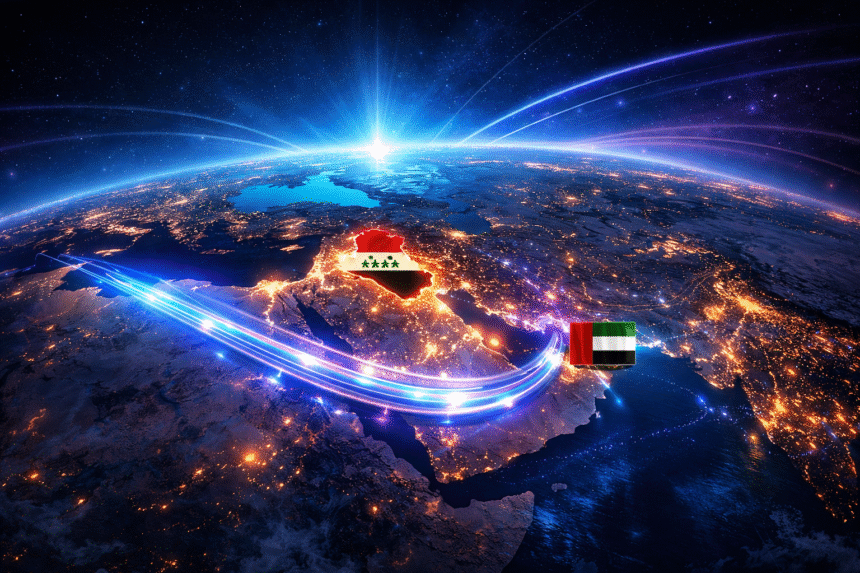
Fast, safe, and reliable connections are essential for the global digital economy. Strong fibre infrastructure is needed for all cloud apps, financial transactions, video calls, streaming platforms, AI systems, and e-commerce sites. Countries that build high-capacity data networks open up new ways to innovate, draw in global tech companies, and make their economies stronger for the future. In this situation, the Iraqi-UAE consortium’s plan to build the $700 million “WorldLink” fast data cable network is a major step forward for connecting people in the region and around the world.
This project is more than just an upgrade to telecommunications. It is a planned infrastructure project that will change the way digital traffic moves between Asia, Europe, and the Middle East. Iraq and the United Arab Emirates are putting themselves at the centre of global data exchange by spending $700 million on advanced fibre optic systems. The WorldLink fast data cable network will make things faster, lower latency, improve cybersecurity, and make Iraq a safe place for digital transit.
The Iraqi-UAE consortium’s announcement of the $700 million “WorldLink” fast data cable network shows that Iraq has a lot of digital potential and that the UAE is still committed to expanding technology in the region. This partnership combines financial strength, geographic advantage, and technical know-how to create one of the most ambitious connectivity projects in the area.
Getting to Know the Vision Behind WorldLink
Digital infrastructure is the backbone of today’s economies. Governments need data systems that are safe. Businesses need cloud services that don’t go down. People want to be able to talk to each other right away and stream without any problems. But these hopes can’t be met without strong fibre networks.
The WorldLink project meets this need by building a high-speed fibre route on land that connects cities in the region and works with global submarine cable systems. This route will make it easy for international data traffic to cross borders. Global operators will get another secure path instead of having to rely on a few old ones.
The $700 million “WorldLink” fast data cable network that the Iraqi-UAE consortium is building is a sign of a long-term digital vision. The aim is to connect Iraq to the global digital value chain and speed up the internet. The project helps the economy diversify, technology improve, and foreign investment grow by doing this.
The strategic importance of Iraq’s location
Iraq is in a unique spot between Asia and Europe. In the past, this area was a trade route that connected continents. The digital world needs similar pathways for data exchange today.
Internet traffic around the world is always going up. Data moves between financial centres in Europe, manufacturing hubs in Asia, cloud providers in the Middle East, and markets in Africa. A reliable land-based fibre route through Iraq offers a shorter and more stable way for this traffic to get where it needs to go.
This geographic advantage is what the Iraqi-UAE consortium is using to build the $700 million “WorldLink” fast data cable network. Iraq can be a main transit point if it builds a high-capacity terrestrial cable system. This placement makes the network less dependent on one route and makes it more resilient to problems.
Countries and telecom companies are looking for other ways to reduce risk. Natural disasters, political tensions, or broken cables can all make it hard for people to connect around the world. The WorldLink fast data cable network adds variety, which makes the global digital world more stable.
The WorldLink Network’s Technical Architecture
Advanced optical transmission systems are what modern fibre optic networks use. These systems send data at very high speeds by sending light pulses. Fibre optic lines have a lot of bandwidth and very little signal loss, which is different from regular copper cables.
The WorldLink network will probably use advanced dense wavelength division multiplexing technology. This system lets more than one data stream travel through a single fibre strand at the same time. As demand goes up, operators can add more capacity without having to build new infrastructure.
Some of the most important parts of the network are
- High-capacity fibre optic backbone that runs through important transit corridors
- Data routing systems that are safe and have smart traffic management
- Extra backup paths to keep the network running smoothly
- Points of connection with landing stations for submarine cables
- Systems that check performance and security in real time
These features make sure that the network can grow, is dependable, and is ready for the future. The $700 million investment is what it costs to put in high-quality materials, advanced transmission equipment, and strong security systems.
The effects on the economy of a $700 million digital investment
Infrastructure projects of this size have an effect on many different areas. Digital networks get the economy going in both direct and indirect ways. There are immediate job openings in construction, installation, and maintenance. Over time, better connections draw in tech companies and digital entrepreneurs.
The Iraqi-UAE consortium is building the $700 million “WorldLink” fast data cable network, which is part of Iraq’s larger plan to diversify its economy. The country can grow into digital services, fintech innovation, e-commerce, and software development by relying less on traditional sectors.
Businesses can save money on operations by connecting faster. Cloud-based startups can run their businesses well. International companies can open regional offices knowing that the network will work. As digital ecosystems grow, the economy grows, which means more money for the government.
Making regional cooperation stronger
The partnership between Iraqi stakeholders and UAE investors shows that people in the region can work well together. The UAE has a lot of experience with projects in telecommunications, smart infrastructure, and connecting people all over the world. Iraq adds a geographic advantage and a growing need for digital goods.
This partnership builds trust and makes the region more connected. When countries work together on strategic infrastructure, they build long-lasting economic and diplomatic ties. The $700 million “WorldLink” fast data cable network that the UAE and Iraq are building together strengthens these ties and sets a good example for future partnerships.
Backing Up 5G, AI, and Cloud Growth
Next-generation technologies need backbone networks that work well. Fibre connections are needed for 5G mobile systems to send huge amounts of data. For AI platforms to work with real-time data, they need low latency. Cloud computing depends on stable connections between countries.
The WorldLink fast data cable network is the basic infrastructure for:
- 5G mobile networks are growing in both cities and rural areas
- Researching and using artificial intelligence
- Ecosystems of the Internet of Things
- Systems for smart cities
- Platforms for edge computing
These technologies have limits without strong fibre networks. Iraq is getting its digital ecosystem ready for the future by putting money into WorldLink.
Steps to protect data and keep it safe online
Governments and businesses still put data security at the top of their lists. Cyber threats are always changing, and infrastructure operators need to keep important assets safe.
The Iraqi-UAE group that is building the $700 million “WorldLink” fast data cable network is using modern security systems at many levels. Encryption technologies keep data safe while it is being sent. Monitoring centres keep an eye on traffic that doesn’t follow normal patterns. Backup systems make sure that things can be fixed quickly if there is a problem.
Security measures probably include:
- Protocols for encrypting data from end to end
- Systems for detecting network intrusions
- The routing architecture that is not needed
- Analytics of performance over time
- Frameworks for quick incident response
These protections make it easier for international telecom companies and cloud providers to trust each other.
Making businesses more competitive
Businesses need reliable connectivity to do their jobs every day. Banks and other financial institutions handle a lot of transactions every day. E-commerce platforms keep track of big databases of products. Millions of people use streaming services from media companies.
The WorldLink fast data cable network lowers latency between continents, which speeds up transactions and makes the user experience better. Companies that do business in Iraq and nearby countries will benefit from faster cloud access and less network congestion.
Better connectivity also makes it easier to work from home. High-capacity fibre networks make video conferencing, digital collaboration platforms, and online training systems work better. This feature makes workers more productive.
Effects on People and Society
Digital transformation has an impact on daily life. Students take classes online. Patients can use telemedicine services. People use online government services. Gamers and streamers want performance that is smooth.
The Iraqi-UAE group that is building the $700 million “WorldLink” fast data cable network is helping with:
- Faster internet speeds at home
- Better quality for streaming
- Video calls that don’t drop.
- Better platforms for online learning
- Better telehealth services
Social inclusion depends on reliable infrastructure. Rural areas can join global networks of knowledge. Small businesses can sell goods to people all over the world. Digital access gives communities more power.
Considerations for the environment and sustainability
Newer fibre networks use less energy than older copper networks. Efficient optical transmission lowers the amount of power needed for each unit of data. Designing infrastructure that lasts can help the environment.
Planning for construction can include practices that are good for the environment. Putting cables underground has less of an effect on what you can see. Over time, data transmission that uses less energy lowers carbon emissions.
As global standards for sustainability get stronger, digital infrastructure projects need to be in line with environmental goals. WorldLink is a chance to bring together technological progress and responsible growth.
Possible Problems and How to Handle Risks
Big infrastructure projects have problems. Getting regulatory approvals may require working together across several jurisdictions. Building on difficult terrain can be technically challenging. Competition in the market may affect how prices are set.
But having strong financial support and experienced partners makes things less uncertain. Clear rules for running projects and open communication about them make things run more smoothly. By taking care of risks ahead of time, the consortium can make sure that the project is finished on time.
The Iraqi-UAE consortium’s plan to build the $700 million “WorldLink” fast data cable network shows that they are thinking ahead about future needs instead of just reacting to current problems.
Long-Term Strategic Results
The digital economy is still growing very quickly. Every year, more people use the internet because of cloud computing, video streaming, and connected devices. Countries that make themselves into transit hubs get long-term economic benefits.
The WorldLink project could lead to other things, like clusters of data centres, regional internet exchange points, and international telecom partnerships. Over time, Iraq could become the best way for traffic to cross continents.
This change helps the economy of the country stay strong. Having different sources of income makes the economy more stable. Digital ecosystems lead to growth that is driven by new ideas.
Effects on the Global Market
International telecom companies are always looking for the best ways to get their calls from one place to another. The $700 million “WorldLink” fast data cable network being built by an Iraqi-UAE consortium adds a new choice for people who want to connect to the internet around the world.
The consortium can get international clients by offering safe and reliable paths. Adoption may be boosted even more by competitive prices and smart partnerships. As the structure of the internet around the world changes, more routes make it more reliable and redundant.
Investors keep a close eye on these kinds of projects. Infrastructure funds and tech companies see digital corridors as long-term investments that will always give them good returns. WorldLink puts Iraq in the context of global investment.
Possibilities for Future Growth
The first use of WorldLink could be the start of bigger digital projects. In the future, there could be more submarine cables added, carrier-neutral data centres built, and agreements made with neighbouring countries to connect across borders.
When traffic goes up, capacity upgrades can happen with more fibre pairs and better optical technologies. Fibre infrastructure is still great because it can grow.
The Iraqi-UAE consortium is building the $700 million “WorldLink” fast data cable network, which will be a platform for ongoing innovation.
Questions and Answers (FAQs)
What is the goal of the WorldLink fast data cable network?
The goal of the project is to build a high-speed fibre optic corridor that links networks in the region and around the world while making them more reliable and safe.
What is the value of the investment?
The total investment is $700 million, which shows that a lot of infrastructure is being built.
What makes this project important for Iraq?
It makes Iraq a digital hub for trade between Asia and Europe and helps the economy become more diverse.
What will businesses gain?
Businesses will get faster connections, less lag, and better cloud performance.
Does the project help new technologies in the future?
Yes, it works with 5G, AI, IoT systems, and cloud computing platforms.
In conclusion
The Iraqi-UAE consortium’s plan to build a $700 million “WorldLink” fast data cable network is a big step forward for digital development in the region. The project improves international connectivity and economic opportunity by using a mix of financial investment, strategic geography, and cutting-edge technology.
As the need for data around the world grows, projects like WorldLink become more important. They help new ideas, make communication safe, and boost economic growth. This project brings Iraq one step closer to becoming a major digital corridor that connects continents.
The WorldLink fast data cable network is not just a cable system. It is a strategic base for long-term global integration and digital leadership.